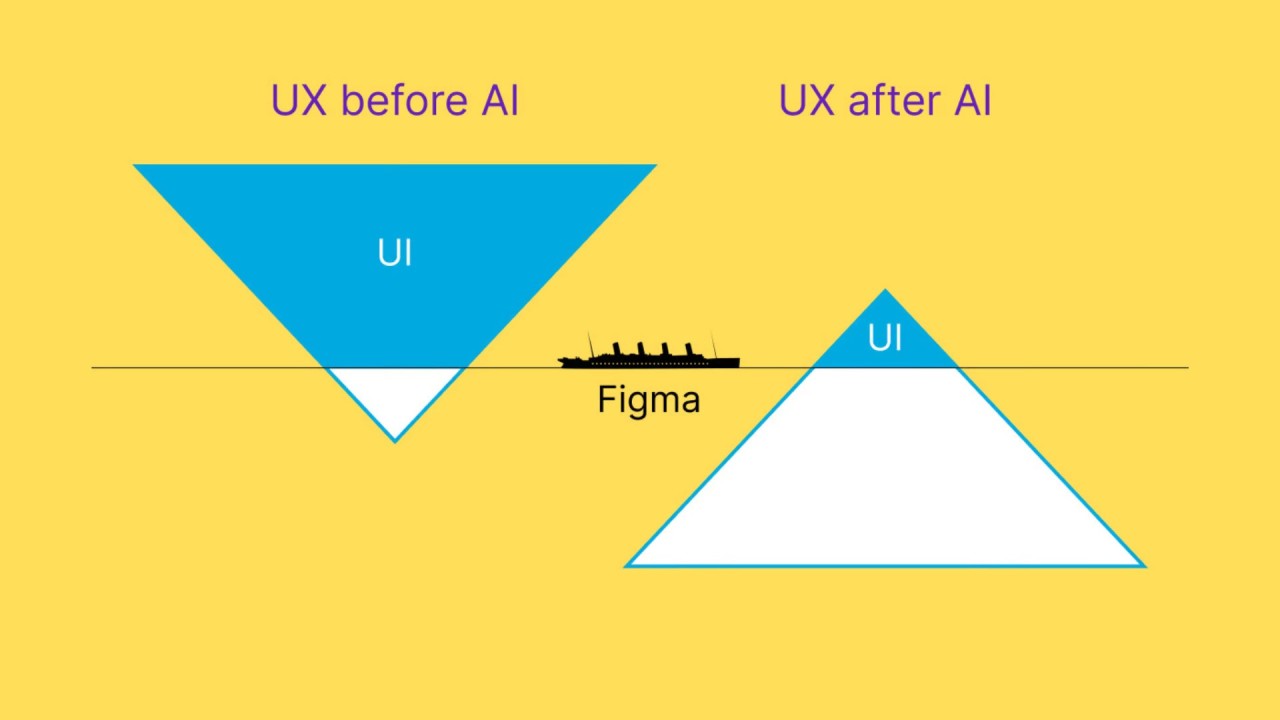
AI isn’t coming for design — it’s becoming part of it.
Every few years, design evolves through new ways of collaborating. Tools like Figma transformed how teams work together — shared files, live edits, connected libraries. Design systems gave us structure and scale. Now, AI is pushing that evolution further, adding speed, depth, and creative range to how we design and build.
AI helps teams move from idea to prototype to test faster. Prototypes let us see if an idea works before investing time and money to build it. They reveal usability issues early and confirm whether we’re solving the right problem. The goal isn’t just to make things look good — it’s to make sure they work for people. AI speeds that up, turning ideas into testable experiences in minutes so we can focus on learning and improving.
The relationship between designers and developers has always been complicated. Designers hand off mockups that never quite survive the build. Developers face shifting specs and tight deadlines. That’s starting to change. AI brings transparency to how things are built. Designs can now carry logic, data, and behavior directly into code. Instead of tossing files over the wall, both sides co-create in the same environment — finally speaking the same language.
With AI, we can bring designs to life, sync systems, connect real data, and test real interactions — all in one space. It’s the natural next step: moving from drawing ideas to building them. Before, prototyping meant linking screens manually and fixing things every time a file changed. Now, prototypes stay connected, behave like real products, and evolve as fast as our ideas.
For years, design tools could show what something looked like, but not how it worked. Now, a single prompt can produce a functional experience with logic and flow in minutes. It’s not perfect out of the box, but once you connect your design system, it starts to understand your style and intent. AI gets you about 70% of the way there. The rest — the craft, nuance, and empathy — is still ours.
AI isn’t replacing designers; it’s extending what we can do. It handles the repetitive work so we can focus on creativity, strategy, and problem-solving. Design is shifting from hands-on creation to high-level curation. We’re becoming guides — helping AI produce work that stays human, ethical, and meaningful. We’re moving toward a world where design isn’t about screens anymore, but about intelligent systems that learn and adapt.
AI marks a turning point — where design and development finally meet. Machines handle the heavy lifting, and we focus on the why behind what we build. And honestly, it’s exciting to be a designer again.


